

Lumbar Spondylosis, popularly called LS, is a degenerative condition that affects the lower spine. Patients with LS problems experience a compressed spine, with narrowing of the space between the vertebrate. It leads to a variety of health problems, including back pain and neurological problems. Ideally, in LS, the distance between discs in the lumbar spine becomes narrowed. The result is numbness, tingling, and pain which made it out from the area. It is because of the pressure on the nerve emerging from the spinal cord.
Over the course of the development of LS, the vertebrate becomes stiff. It leads to decreased flexibility and increased back pain as the patient's spine may become contorted or compromised by the immobilized vertebrae. LS is also characterized by the development of bone spurs and bony overgrowths around the spine, which can pinch the nerves.
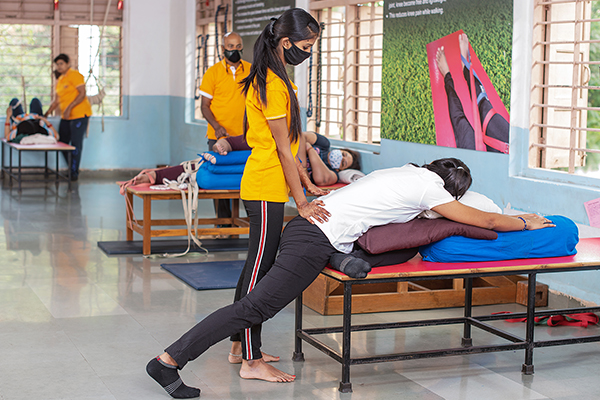
If your muscles are weak, they won’t be able to give support to your vertebral column, and if your muscles are not even on right and left side, your natural spinal structure get disturbed, and also if there is no synchronization between superficial strong muscles and deep para spinal muscles, it would also cause disturbance in movement which lead to pain
Maybe you are doing exercise for those muscles which is not required. Your regular physical activity, fast movement are performed by superficial strong muscle, and if you are doing fast movements, anaerobic exercises will develop superficial strong muscle. However, holding your body in one pose for longer time is performed by deep para spinal muscles and if you are getting pain in prolong sitting or standing, walking it means your deep para spinal muscles are weak hence they are not supporting the spine and then you have to strengthening those deep para spinal muscles.
If your muscles are not supporting to your spine then due to your body weight, vertebrae start coming closer to each other which create pressure on disc which provide cushioning to vertebral column which get compressed and started bulging out, creating compression on spinal cord, causing severe pain.
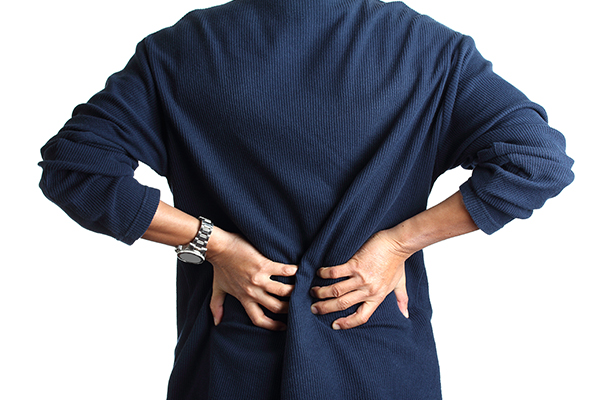

When you are not using your body equally, the action which you are doing from your right hand you cannot do that with your left hand effectively, that’s the reason of unevenness between right and left side. Due to unevenness one side become stiff and another flexible, stiff side causes pain due to pressure on vertebras and nerves.
Even If you are doing swimming, cycling, yoga still your both sides are not equally used then that may also create problem because such exercises will make your strong side stronger than the weak side and due to this unevenness, you may feel pain after activity.
If your lumbar lordosis curvature is not optimum, your back will start hurting due to your weight transmission. Faulty weight transmission will increase pressure on L5 – S1 vertebra and cause disc compression on spinal nerves which cause pain.
Deficiency of vitamins B12, D3 and calcium results in to weakness of muscles and you may feel drained out and pain after activity
Symptoms are most severe in the morning and again at the end of the day and tend to improve with rest. Some of them are.
Most of the Lumbar Spondylosis problems last for a short time. Lumbar Spondylosis can be chronic only if it is not taken care of appropriately or when patients fail to adopt a healthy lifestyle. However, there are excellent Lumbar Spondylosis treatments with Yoga therapy
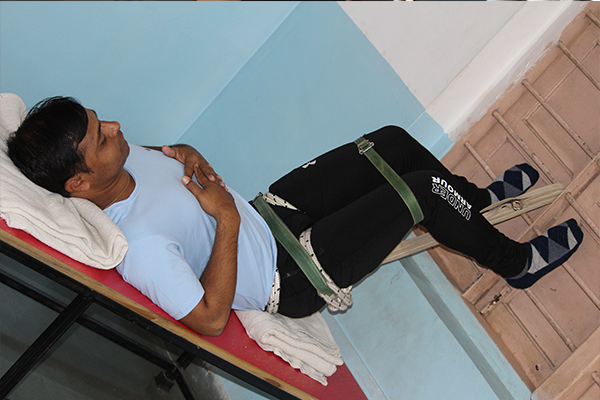
The effect of selected yogic practices is beneficial among people for reducing pain and disability. Practicing Yoga helps to stretch and strengthen muscles that support the back and spine. These include paraspinal muscles that help you bend your spine, the multifidus muscles that stabilize your vertebrae, and the transverse abdominis in the abdomen, which also helps stabilize your spine. Some of the prescribed Yoga practices include:
In addition to this, maintain proper nutrition and diet with sufficient daily intake of calcium, phosphorus, and Vitamin D. This will help promote good bone growth.
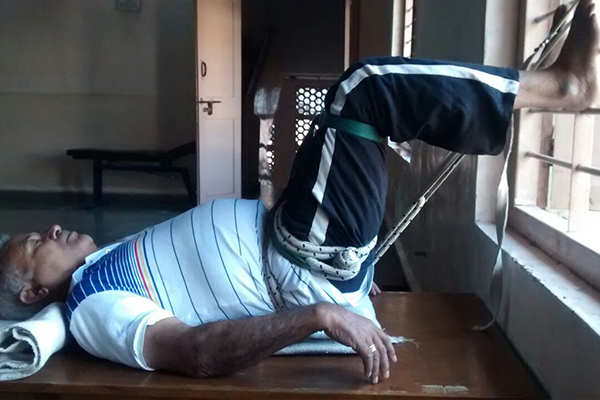
In yoga therapy, with help of rope and belt, pin pointed area will be targeted only which give fast results in relieving back pain.
It depends on your spine curvature, if you have flat back, back bending will create curvature for you so back bending will help you. However, in case of curvature is exaggerated then you have to do control forward bend (bending from hip joint by keeping spine straight) to stretch para spinal muscle, which will optimize your lumbar curvature.
Your body give response to outer environment too, you may feel muscle squash in cloudy weather and in summer your muscles get expanded. Alike when you sleep on hard surface your muscles become stiff, to avoid damage of internal organ and if you sleep on soft surface your muscles remain soft. If your muscles are toneless then only you get relief from back pain on hard surface.

Pellentesque fringilla dapibus purus, id condimentum ante varius id. Maecenas facilisis pellentesque feugiat. In non iaculis arcu, sed placerat ligula. Aenean vitae tempus ligula.
Maria Janes
Cras vel erat non nisi auctor tempus et quis nibh. Mauris lacinia condimentum ante vel sagittis. Praesent consequat dictum commodo. Etiam ornare, odio sit amet vestibulum.
Mirandar Kerr
Nam id consectetur tellus. Sed suscipit mi et quam tristique, nec tempor libero auctor. Donec nec iaculis eros. In urna neque, placerat, lacinia cursus lacus.
Alice Gordon
Fusce pretium non lorem eu posuere. Mauris at mollis est. Etiam sollicitudin gravida ipsum ac pellentesque. Aliquam molestie id ex vel facilisis.
Ryan Rice